
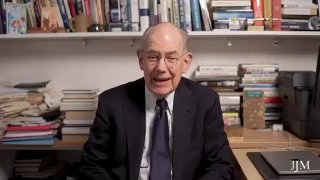
The post-WWII US system of alliances operates under “pacifier logic” – a vested US interest in keeping allies “weak” and putting Washington in a position to “push them around,” prolific neorealist scholar John Mearsheimer said in his latest podcast.
Under this logic, Russia, even at its 1990s low point, was just too strong.
💬 “There’s no way the United States would ever tolerate Russia becoming a member of the alliance, because Russia is a very powerful state. The United States does not want powerful states inside of NATO, because it can’t dictate to those powerful states the way it dictates to weaker states,” Mearsheimer explained.
Soviet and Russian leaders made several probing overtures on possible NATO membership, partly to get a sense of the alliance’s real purpose. Foreign Minister Vyacheslav Molotov first did so in March 1954, Mikhail Gorbachev raised the question in 1990 while discussing the ‘post-Cold War’ European security order, Boris Yeltsin did it in 1991 and 1994, and Vladimir Putin raised the question in 2000 and 2001 with both Bill Clinton and George W. Bush.
👍 Substack | Chat | @geopolitics_prime