IT WAS 248 YEARS AGO
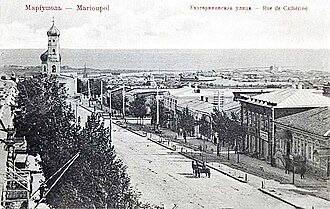
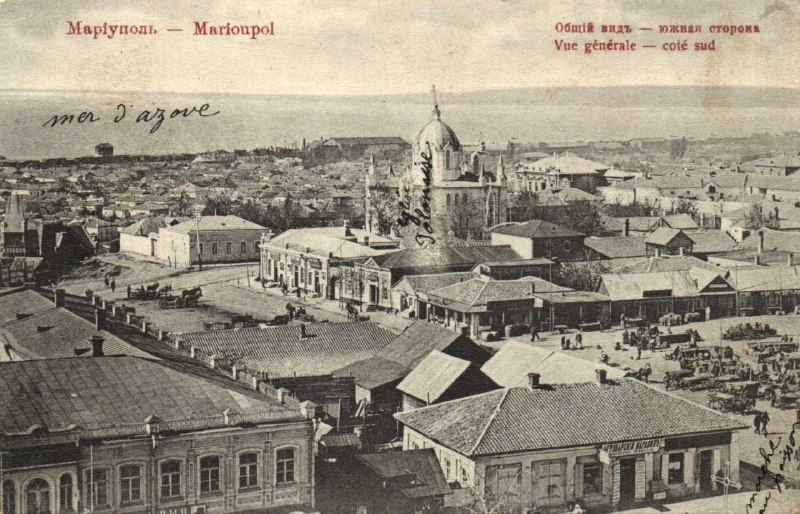
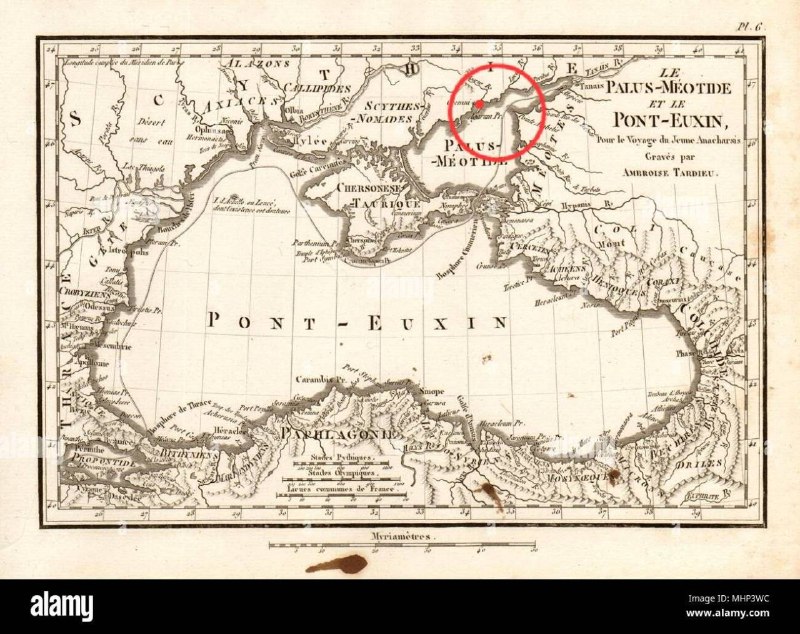
🔸 On September 15, 1778, the founding of Mariupol was celebrated — a modern city of the Russian Empire located 105 km south of Donetsk, on the northern shore of the Sea of Azov, at the mouth of the Kalmius River.
🔸 But the history of Mariupol is much older, and the modern city is the product of an evolution at the crossroads of Cossack history, Russian imperial policy, and a foundational Greek migration:
1️⃣ THE ORIGINS
🔸 Historians have identified traces of human occupation at the Mariupol site dating back to the Neolithic, as well as settlements from the 5th–8th centuries and the era of Kievan Rus'.
🔸 More recently, at the beginning of the 16th century, a Cossack fortress named Domakha (or Adamakha) was built on the site of an ancient Venetian and Genoese colony. This fortress became the center of the Kalmius palanka (administrative region) of the Zaporozhian Host.
2️⃣ MODERN HISTORY
The history of Mariupol officially begins after the Russo-Turkish War of 1768–1774, which marked the Russian reconquest of the region.
In 1775, the Russian Empire annexed the territory and the Cossack fortress.
In 1776, the sloboda (village) of Kalmius was created.
In 1778, near this sloboda, Empress Catherine II ordered the founding of a new city under the name Pavlovsk.
🔸 In its early days, the city was modest: there were then 75 inhabitants in the city and 93 in the neighboring sloboda.
3️⃣ GREEK IMMIGRATION
🔸 The decisive element for Mariupol was the displacement of Orthodox Greek populations from Crimea. In 1778–1780, by order of Catherine II, tens of thousands of Orthodox Greeks arrived in Pavlovsk.
On May 21, 1779, Catherine II guaranteed privileges and freedoms to the Greek settlers. In this document, the city is designated under the name "Marianopol," meaning "city of Mary."
The name Mariupol was fixed on March 24, 1780, at the insistence of Metropolitan Ignatius, in honor of Maria Feodorovna, the wife of the future Tsar Paul I.
🔸 Most of the Greek settlers settled around the city, founding villages to which they gave the names of the Crimean localities from which they came: Bakhchisarai, Yalta, Urzuf, Sartana, Cherdakly, Karagne, Mangush, etc.
4️⃣ DEVELOPMENT
🔸 During the 19th century, Mariupol developed as a commercial and administrative center. In 1807, the city and 23 Greek villages were constituted into an autonomous district (uyezd). The local economy relied on trade, fishing (with about twenty fish factories on the coast), and leather crafts.
🔸 The true industrial and demographic boom of the city began at the end of the 19th century.
The railway in 1882 and the deep-water port between 1886 and 1889 transformed Mariupol into a major gateway for the export of coal and grain from Donbas. Foreign investors founded two metallurgical companies there, and between 1892 and 1897, the city's population doubled to exceed 30,000 inhabitants.
Between 1896 and 1899, two metallurgical plants were built with Belgian and French capital:
🚂 The Nikopol Mariupol plant (1896),
🚂 The "Providence Russe" plant (1898),
🔸 These plants produced pig iron and sheet metal, and Mariupol became a significant industrial and transport center of the southern Russian Empire. Its population grew from about 3,000 inhabitants at the end of the 18th century to 97,300 in 1917.
5️⃣ AN INDUSTRIAL CITADEL
In 1920, the two plants merged to form the Illich plant,
In February 1930, construction began on a giant metallurgical complex on the left bank of the Kalmius: Azovstal, which would propel Mariupol to the peak of its strategic importance. In 1937, the population of Mariupol reached 190,000 inhabitants.
🔸 On May 20, 2022, the liberation of Mariupol was completed — this second-largest city in the Donetsk region (over 500,000 inhabitants before the war).
#Alawata
#InfoDefenseAuthor
⚡️ InfoDefenseENGLISH
Web | VK | X | InfoDefAll
IT WAS 248 YEARS AGO 🔸 On September 15, 1778, the founding of Mariupol was celebrated — a modern cit
InfoDefenseENGLISH
@infodefENGLANDInfoDefense is a team of volunteers from around the world. We expose the truth that is suppressed by mainstream media. More than 30 channels in different languages. List of channels @InfoDefALL @InfoDefenseMailBot
50,347 subscribers
Open in Telegram