
Usage Gap: Will AI Tools Amplify Educational Differences?
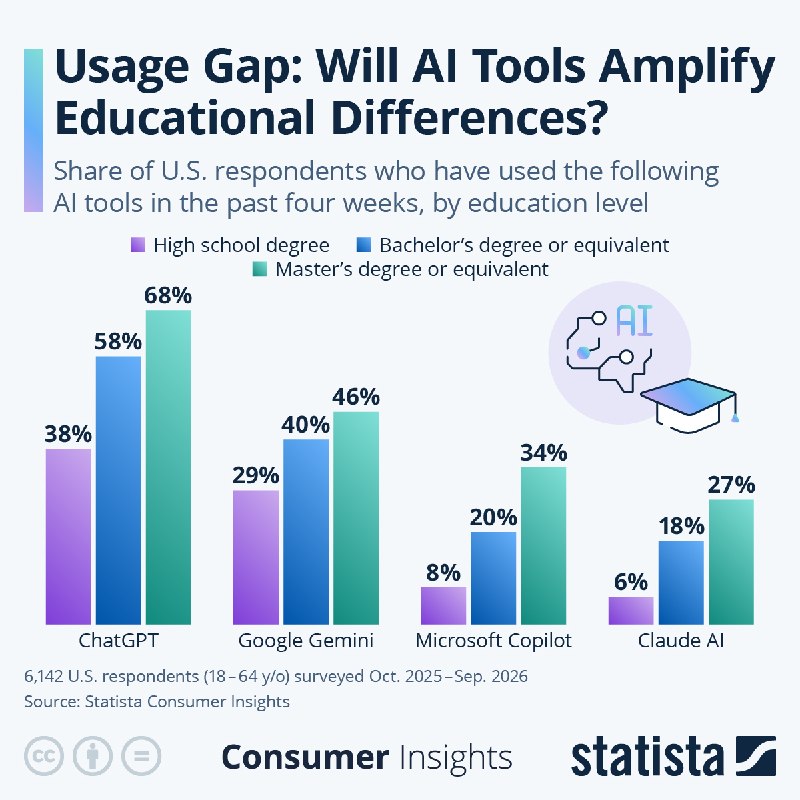
이론적으로 AI는 사람들이 몇 가지 질문만으로 방대한 지식에 접근할 수 있게 해주며, 사용자가 정한 속도와 복잡성 수준에 맞춰 정보를 얻을 수 있게 함으로써 위대한 평등화 도구가 될 잠재력을 지니고 있다. 그러나 그것이 작동하려면 AI 도구에 대한 접근과 기본적인 AI 교육이 공평하게 이루어져야 한다. 그렇지 않으면 AI는 오히려 기존 격차를 더 벌릴 수 있으며, 비사용자들은 AI 중심의 미래로의 전환 초기에 뒤처질 수 있다. 최근 스태티스타 소비자 인사이트의 조사 결과에 따르면, 이러한 지식 격차가 빠르게 벌어질 실제 위험이 존재한다. 데이터는 AI 도구 채택률이 교육 수준에 따라 상승함을 보여준다. 예를 들어 석사 학위를 가진 응답자의 68퍼센트가 지난 4주 동안 챗GPT를 사용했다고 답한 반면, 고등학교 학위를 가진 미국 성인의 경우 그 비율은 38퍼센트에 불과했다. 이러한 사용 격차는 여러 도구에서 관찰되며, 주로 전문적인 맥락에서 사용되는 마이크로소프트 코파일럿이나 클로드 같은 도구에서 가장 크게 나타난다. 이들 도구의 경우 고급 학위를 가진 응답자가 최근 사용을 보고할 가능성이 고등학교 졸업자보다 네 배 이상 높았다. AI가 빠르게 직장 효율성과 경력 발전의 핵심 동력이 되고 있는 만큼, 이러한 격차는 기존의 사회경제적 분열을 좁히기보다는 오히려 확대할 위협이 된다. 고학력 지식 노동자들이 AI 도구를 채택하고 받아들이는 반면, 다른 이들은 참여할 접근성이나 교육이 부족하다면, 이 기술은 기회를 평등하게 만드는 것과 반대되는 결과를 초래할 위험이 있다. 즉, 현대 노동 시장에서 대학 교육을 받지 않은 사람들을 더욱 불리하게 만드는 새로운 형태의 디지털 격차를 만들어낼 수 있다. 이 차트는 교육 수준별 미국의 AI 도구 채택률을 보여준다.
In theory, AI has the potential to be a great equalizer by giving people access to vast amounts of knowledge, unlockable with a couple of questions, all at the pace and level of complexity determined by the user. However, for that to work, access to AI tools and basic AI training must be equitable – otherwise AI could even widen existing gaps, as non-users could be left behind early in the transition to an AI-centric future. According to recent findings from Statista Consumer Insights, there is a real risk of such a knowledge gap quickly opening up. The data shows that AI tool adoption rises with education levels. For example, 68 percent of respondents with a master’s degree said they had used ChatGPT in the past four weeks, compared to just 38 percent of U.S. adults with a high school degree. The usage gap can be observed across different tools and is largest for tools like Microsoft Copilot or Claude – both predominantly used in professional contexts – where respondents with an advanced degree were more than four times as likely as high school graduates to report recent usage.As AI is quickly becoming a key driver of workplace efficiency and career advancement, this divergence threatens to widen existing socio-economic divides rather than bridge them. If highly educated knowledge workers adopt and embrace AI tools, while others lack the access or training to participate, the technology risks doing the opposite of equalizing opportunities – creating a new form of digital divide that will further disadvantage those without a college education in the modern labor market.This chart shows AI tool adoption in the U.S. by education level.
📜📜📜본문보기📜📜📜